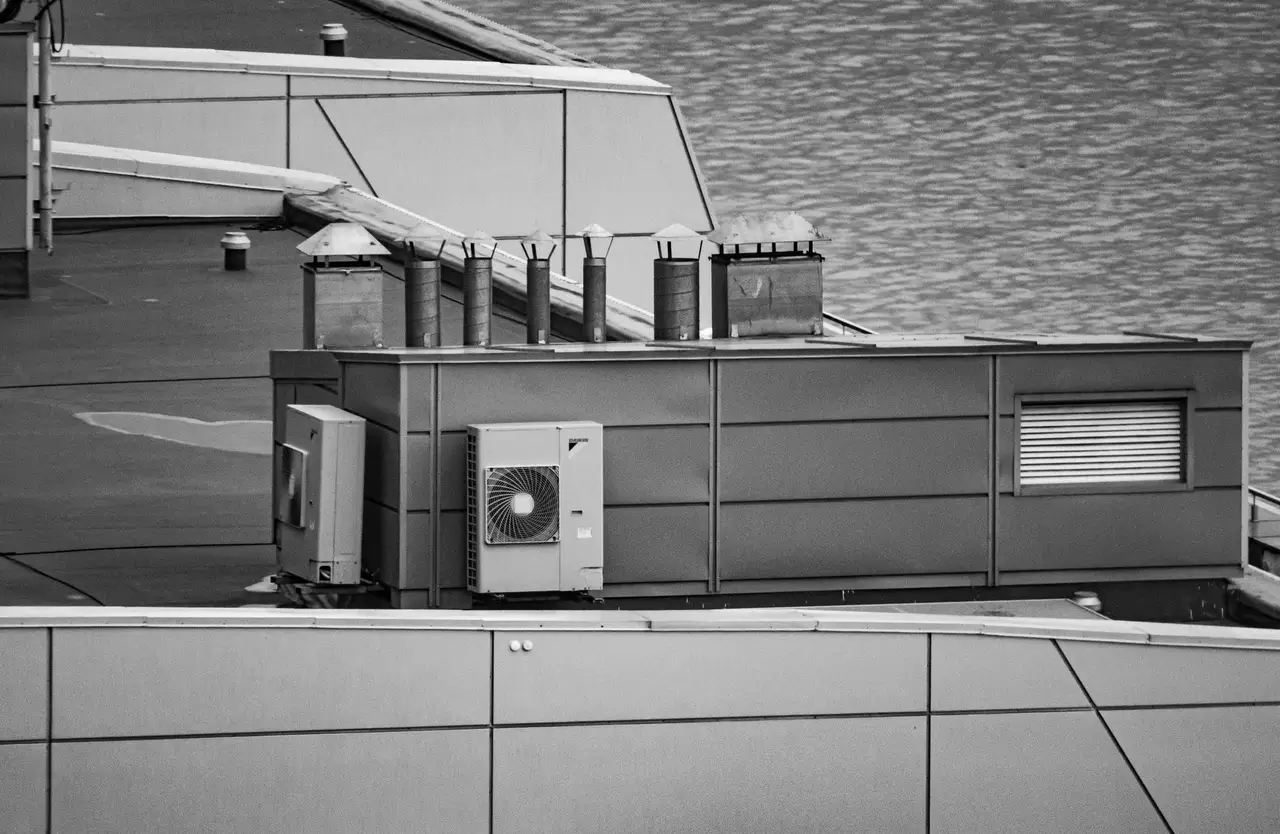
Central Air Conditioning Replacement
Central Air Conditioning Replacement Des Moines IA done right
When your old condenser finally quits, central air conditioning replacement Des Moines IA homeowners can count on starts with a proper Manual J load calculation, not a guess. We size Carrier, Trane, and Lennox systems to your square footage, ductwork, and insulation, then pull the Des Moines building permits and haul the old unit away. If your AC is 12 to 15 years old and limping through July, replacement beats another $900 repair.
Service overview
Central Air Conditioning Replacement Des Moines IA explained
Central air conditioning replacement Des Moines IA is the full removal and installation of your outdoor condenser, indoor evaporator coil, refrigerant line set, and thermostat, plus the startup and charge that makes the new system run to spec. We recover the old R-410A or R-22 charge with a recovery machine, verify the new coil matches the furnace or air handler, and pressure-test every braze joint before we ever open the valves. A typical swap runs four to eight hours for a straight changeout, longer if the line set has to be rerouted through finished ceiling.
Des Moines summers hit 95 degrees with humidity that makes a 78-degree house feel like a sauna, and a 15-year-old condenser that barely kept up in 2015 will flat-out fail by August. If you're searching for central cooling replacement near me Des Moines IA because your unit is short-cycling, freezing up, or pushing lukewarm air, we'll tell you straight whether a repair buys you another season or whether it's time to replace old central air conditioner Des Moines equipment. Most homeowners get 12 to 18 years out of a well-maintained system; past that, efficiency losses and refrigerant costs make replacement the cheaper call.
Practical benefits
Why replace instead of repair
A new central AC isn't just about cold air. It's about what you stop paying every month and what stops breaking every July.
Lower cooling bills
A 16 SEER2 replacement for a 10 SEER unit cuts cooling costs roughly 30 to 40 percent. On a Des Moines home spending $180 a month in summer, that's $50 to $70 back in your pocket during the hottest four months. Energy Star central AC replacement Des Moines IA systems also qualify for utility rebates that knock $300 to $600 off the install.
Fewer breakdowns
New systems come with 10-year parts warranties and 1 to 2 year labor coverage. No more $400 blower motor calls in July, no more refrigerant leak chasing on a coil that's already corroded. You get a unit that runs to spec from day one and stays that way with a $99 spring tune-up.
Real humidity control
Iowa humidity is the real enemy. A properly sized two-stage or variable-speed system pulls 30 to 40 percent more moisture out of the air than a single-stage unit, so your house feels cold at 74 instead of clammy at 70. That alone is worth the upgrade for two-story homes with uneven airflow.
Quieter, cleaner operation
Modern condensers run at 58 to 65 decibels, roughly half the noise of a 2008-era unit. Paired with a Nest or Ecobee thermostat and a fresh air filter, you get quieter nights, better filtration, and a system that actually talks to your phone when something's off.
How service works
How our replacement process works
No surprises, no mystery pricing. Here's exactly what happens from the first call to the day we hand you the thermostat.
STEP 01
In-home assessment
We measure every room, check attic and wall insulation, inspect your existing ductwork for leakage, and run an ACCA Manual J load calculation. That tells us the exact tonnage your house needs. Skipping this step is why so many Des Moines homes end up with an oversized unit that short-cycles and dies early. Takes 45 to 60 minutes.
Tools and methods
Tools and methods we use
Manifold gauge set
Reads high and low side pressures during charging and diagnostics. We use digital manifolds that log superheat and subcooling so the charge is exact, not eyeballed.
Vacuum pump and micron gauge
Pulls the system down to 500 microns before charging. Skipping this step traps moisture in the line set and kills compressors within a few seasons.
Refrigerant recovery machine
Recovers the old R-410A or R-22 charge per EPA Section 608 rules. Nothing vents to atmosphere, and the refrigerant gets recycled.
Thermal imaging camera
Finds duct leakage, hot spots, and insulation gaps in walls and attics. We use it during the assessment to catch airflow problems a visual inspection misses.
Duct pressure gauge
Measures static pressure across the air handler and duct system. High static pressure means the new system will underperform no matter how good the equipment is.
Leak detector and nitrogen regulator
Pressure-tests every braze joint with nitrogen before we open the valves. If there's a leak, we find it before the refrigerant goes in, not after.
Fin comb and coil cleaning sprayer
Straightens bent condenser fins and deep-cleans the coil. A clean coil moves more air and drops your head pressure, which extends compressor life.
ACCA Manual J load calculation
We measure every room, window, and insulation R-value, then calculate the exact tonnage your home needs. This is the single step that separates a properly sized system from the oversized units we replace every week in Des Moines.
ACCA Manual D duct design
We verify the ductwork can deliver the airflow the new system requires. If the existing ducts are undersized, we modify them so the equipment runs at rated capacity instead of choking on high static pressure.
Nitrogen pressure test and deep vacuum
Every install gets a nitrogen pressure test to 300 psi, then a vacuum pulled to 500 microns and held for 15 minutes. If it doesn't hold, we find the leak before charging.
Weighed-in refrigerant charge
We charge by weight per the manufacturer's data plate, then verify superheat and subcooling with a digital manifold. No topping off until the gauges look close enough.
Commissioning and temperature split verification
Before we leave, we measure return and supply air temperatures and confirm an 18 to 22 degree split. If it's off, we adjust airflow or charge until it's right.
Where this service fits
When Des Moines homeowners replace their AC
Your AC is 15 years old and you've paid for two repairs in three summers.
We assess the compressor, coil, and blower, then quote both repair and replacement side by side. If the repair is more than 30 percent of replacement cost, we'll tell you straight that new equipment is the better money. You stop throwing money at a dying system and get a 10-year parts warranty on equipment that will outlast your mortgage.
You're selling the house and the inspection flagged the AC.
We do a fast assessment, quote a code-correct replacement, and can usually install within a week. We pull the permit and provide documentation the buyer's agent will accept. The sale closes on schedule with a new system, a permit sign-off, and a transferable warranty for the buyer.
You're adding a room or finishing a basement and the existing AC can't handle it.
We run a new Manual J with the added square footage, then either upsize the condenser or add a ductless mini-split zone for the new space, whichever makes more sense for your layout. The whole house stays cool, including the new space, without oversizing the main system and wasting energy.
Your AC died in a July heat wave and you need cooling today.
We stock common 2 to 3.5 ton Goodman and Carrier units, so we can often install same day. Call before noon and there's a good chance you're sleeping in cool air that night. No hotel, no week-long wait, no miserable nights. Same-day replacement with a full warranty.
Local execution
How replacement runs in Des Moines
Des Moines sits in a climate that swings from negative 20 in January to 100 in July, and that range is hard on cooling equipment. Our summers average 25 to 30 days above 90 degrees, and the humidity off the Des Moines River valley pushes dew points into the 70s, which means your AC is doing double duty: dropping temperature and pulling moisture. A system sized only for temperature will leave your house clammy at 72 degrees. We size for latent load, not just sensible load. Building stock matters too. Sherman Hill and the Drake Neighborhood have 1920s homes with plaster walls and minimal insulation, which need different sizing than a 2015 build in Waveland Park. Older homes often have undersized returns that choke a new system, so we check static pressure before we quote. If you're comparing central air conditioner replacement Des Moines options, ask any contractor whether they run a Manual J and check duct static pressure. If they don't, they're guessing, and you'll pay for it in efficiency losses and premature equipment failure.
Sherman Hill
Historic homes with plaster walls and limited attic space. We often run line sets through interior chases and use low-profile condensers to fit tight side yards.
Waveland Park
Mid-century homes with original ductwork that's often undersized for modern equipment. We frequently modify returns and add a second zone for upstairs bedrooms.
Beaverdale
Mix of 1950s ranches and newer infill. Ranches usually need 2 to 2.5 tons; two-story infill often needs 3 to 3.5 with zoning.
Drake Neighborhood
Older two-story homes with basements that flood. We elevate condenser pads 4 to 6 inches above grade to keep equipment out of standing water.
East Village
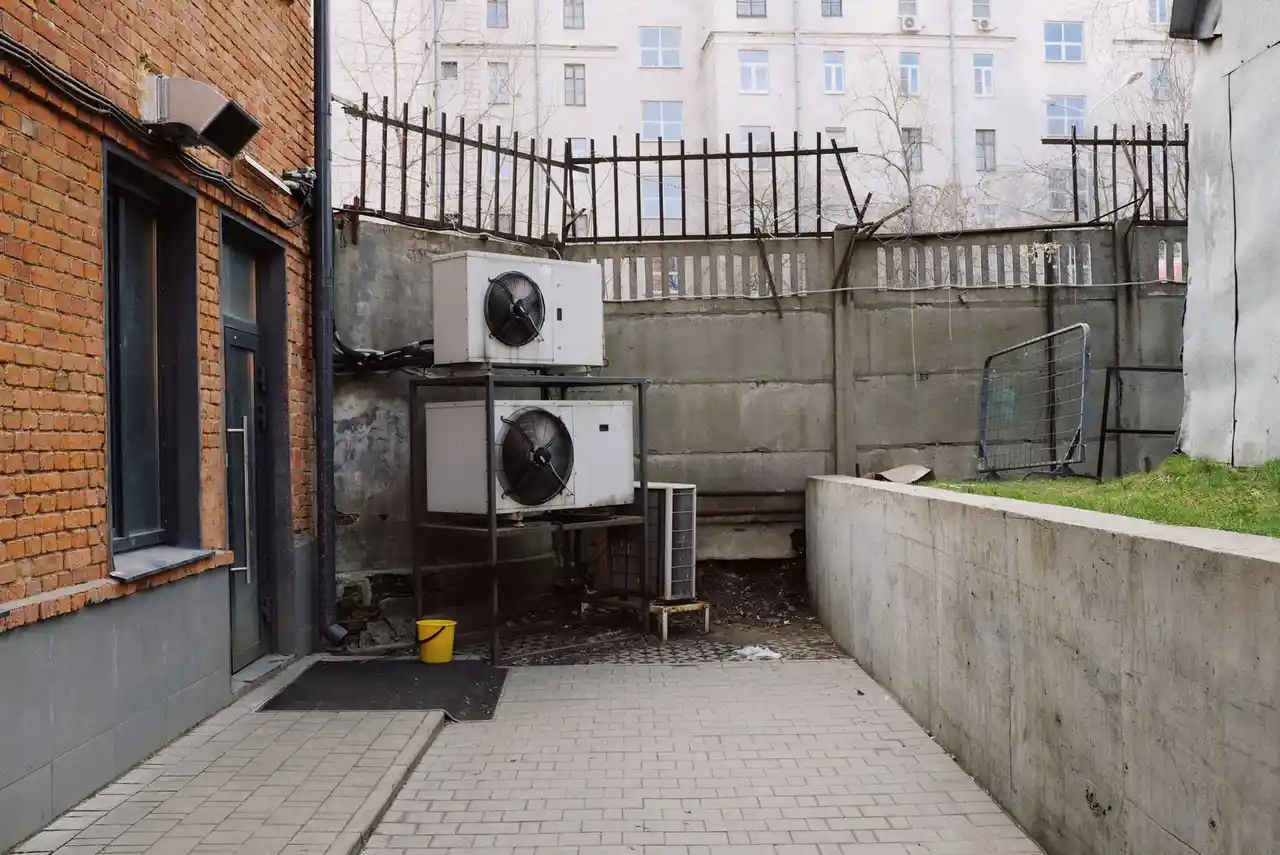
Lofts and condos with rooftop or balcony condenser placements. We coordinate with building management on noise and clearance requirements.
High summer humidity and dew points in the 70s
We size for latent load and recommend two-stage or variable-speed equipment that runs longer at lower capacity to pull more moisture out of the air.
Wide temperature swings from winter to summer
Equipment has to handle a 120-degree annual range. We spec systems with cold-climate ratings and verify the defrost cycle on heat pump replacements.
Older housing stock with undersized ductwork
We measure static pressure on every assessment. If the ducts can't handle the new system's airflow, we quote duct modifications alongside the equipment.
Des Moines building permit requirements
Every replacement needs a permit and inspection. We pull it, schedule the inspection, and provide the sign-off documentation for your records.
Problems we solve
Problems a new central AC solves
Most Des Moines homeowners call us because something's already failing. Here are the four issues we see most, and what a proper replacement does about them.
AC can't keep up on 95-degree days
We run a Manual J load calc, size the new system correctly, and verify the ductwork can deliver the airflow. A properly sized replacement holds 72 degrees on the hottest day without short-cycling. Your house sits at 80 degrees from 2 to 8 p.m. every July, and the unit runs nonstop without ever catching up. That's an oversized-load problem or a dying compressor.
Refrigerant leaks every summer
We replace the coil and line set, pressure-test every joint, and pull a deep vacuum before charging. A new sealed system holds its charge for the life of the equipment. You're paying $300 to $600 a season for R-22 or R-410A top-offs on a system that will never hold a charge again. That money is gone.
Uneven cooling in two-story homes
We size the new system for the full load, then add zoning dampers or a second zone if needed. Bedrooms hit 72 while the main floor stays comfortable, no thermostat war. Upstairs runs 8 to 10 degrees hotter than the main floor, so you crank the thermostat down and freeze the basement trying to cool bedrooms.
R-22 system that can't be legally recharged
We replace the R-22 equipment with R-410A or R-32, install a new line set rated for the new refrigerant, and get you into a system that's serviceable for the next 15 years. R-22 production ended years ago, and the remaining supply costs $100 to $150 a pound. A recharge on a leaky system can run $1,500 and still fail next summer.
A practical standard for every visit.
Clear planningPrepared arrivalsCareful workLocal follow-through
Experience in the details
Local experience you can verify
Our techs hold NATE certification and EPA Section 608 certification, and we work under a current Iowa HVAC license. We've replaced hundreds of central air systems across Polk County, from 1920s bungalows in Sherman Hill with no existing ductwork to new builds in Waveland Park with zoned two-stage setups. We know which Des Moines neighborhoods have undersized returns, which ones flood basements that eat condenser pads, and which older homes still have R-22 equipment that needs a full line-set replacement rather than a recharge.
- NATE-certified technicians on every install, not subcontractors
- EPA Section 608 certification for safe refrigerant recovery and handling
- ACCA Manual J load calculations on every replacement, no rule-of-thumb sizing
- Current Iowa HVAC license and Des Moines building permits pulled on every job
- 10-year parts warranties and 1 to 2 year labor warranties on all new equipment
Where we work
One local team. A lot of ground covered.
Downtown Des MoinesEast VillageSherman HillDrake NeighborhoodBeaverdaleWaveland ParkHighland ParkIngersoll ParkSouth of GrandWaterburySalisbury OaksUnion Park
Check my address Most 2026 replacements in Des Moines run $5,200 to $9,800 installed, depending on tonnage, SEER2 rating, and whether the line set needs replacing. A basic 2-ton 14.3 SEER2 Goodman lands near the low end; a 4-ton variable-speed Trane with a new line set and Nest thermostat sits at the top. Add $400 to $900 if we need to modify ductwork or add a return.
Expect 12 to 18 years in Iowa's climate, shorter if the system was oversized or never serviced. Des Moines sees 25 to 30 days above 90 degrees each summer, and that heat load wears compressors faster than milder markets. If your unit is past 15 and you've paid for two repairs in three years, replacement is the smarter money.
Replace when repairs exceed 30 percent of replacement cost, when your R-22 system needs a recharge, or when you're chasing hot rooms and high bills every July. A 10 SEER unit from 2005 costs roughly $700 a summer more to run than a 16 SEER2 replacement. If you're weighing a $1,200 compressor swap on a 16-year-old condenser, put that money toward new equipment.
We do, across Polk County and every Des Moines ZIP from 50309 to 50317. Our NATE-certified techs handle the full job: permit, removal, new line set, vacuum, charge, and startup. Call 515-876-5435 and we'll schedule a free in-home assessment, usually within 24 hours, and often same day if your system is down.
Keep exploring
Related Services
Your next step is waiting
Get your central air conditioning replacement Des Moines IA quote
Call 515-876-5435 and we'll schedule a free in-home assessment, usually within 24 hours. You'll get written options, honest sizing, and a same-day install if your system is down. Licensed, insured, and warrantied across Polk County.
Start with the basics
Contact Des Moines Heating Repair Pros
Call us at 515-876-5435 any time, day or night. Our dispatchers answer 24/7 and can usually schedule a same-day visit for heating and cooling problems in Des Moines. Prefer email? Send your address and a quick description of the issue to info@desmoinesheatingrepairpros.com and we will get back to you fast.